LCHR Conference “Current Human Rights Issues in Latvia: An NGO Perspective” Held on 22 October.
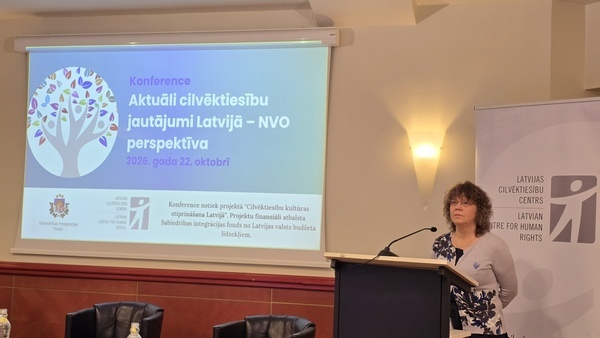

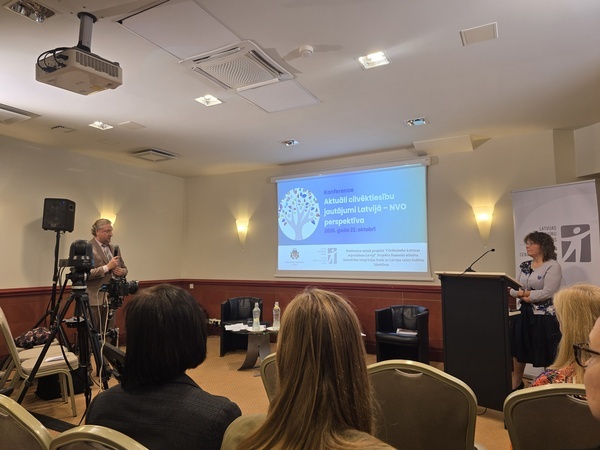
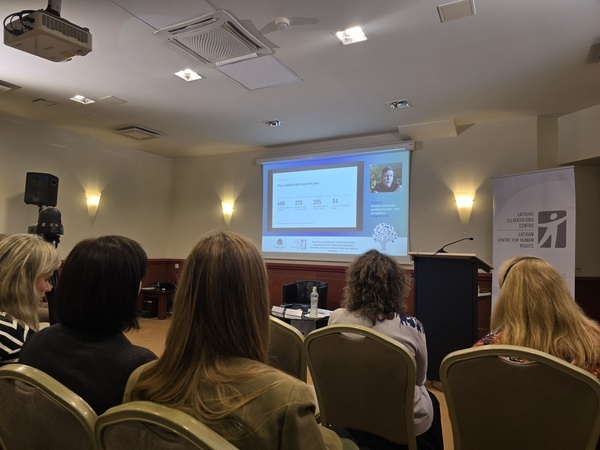
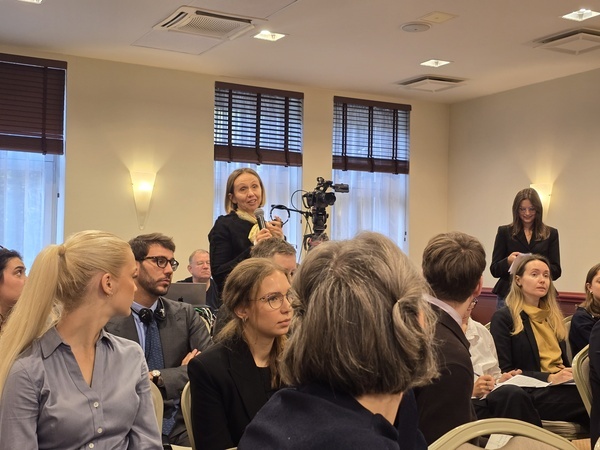
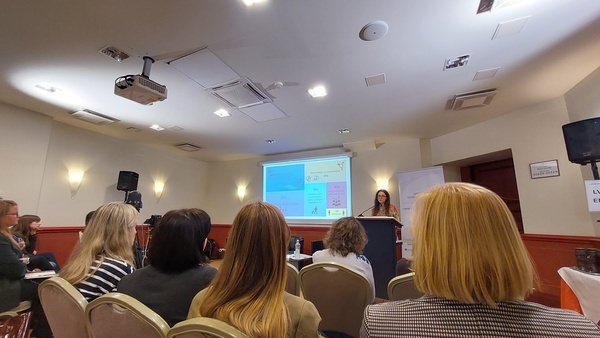
On 22 October, the Latvian Centre for Human Rights organised the conference “Current Human Rights Issues in Latvia: An NGO Perspective.”
The first part of the conference focused on current human rights issues in Latvia, Estonia and Poland from the perspective of human rights NGOs.
A. Kamenska, Director of the Latvian Centre for Human Rights, provided an overview of key human rights developments in Latvia in 2026, with particular emphasis on civil and political rights. She presented a range of reports on human rights issues produced in Latvia during 2026, including the LCHR report Human Rights in Latvia in 2025 (covering 12 thematic areas), as well as reports published by the Council of Europe and United Nations human rights monitoring bodies. A. Kamenska highlighted several factors affecting the human rights situation in Latvia, including Russia’s invasion of Ukraine, the ongoing tensions at the Latvia-Belarus border, and the Saeima’s decision to withdraw from the Istanbul Convention, among others. She also addressed current developments relating to violence against women and domestic violence, freedom of expression and media freedom, and hate speech and hate crime.
Liliana Sauša, lawyer at the Latvian Centre for Human Rights, provided an update about asylum seekers in Latvia, as well as developments and challenges related to the entry into force of the EU Migration and Asylum Pact. She also discussed recent developments concerning Ukrainian civilians granted temporary protection status.
A. Kamenska expressed concern about the operating environment for civil society in Latvia, informed participants about several recent court judgments concerning freedom of assembly, discussed current issues relating to minority rights and social cohesion, presented up-to-date data on Russian Federation citizens affected by amendments to the Immigration Law, and outlined developments to watch in 2027.
Uljana Ponomarjova, a lawyer from the Estonian Human Rights Centre, spoke about recent developments in the field of asylum in Estonia. In July 2026, Estonia experienced a sharp increase in the number of irregular migrants and asylum seekers, including unaccompanied minors, arriving from Latvia after crossing from Belarusian territory. This has led to overcrowding in detention facilities, a significant increase in the workload of administrative courts, and a need for additional legal professionals.
Marcin Wolny, a lawyer from the Helsinki Foundation for Human Rights in Poland, discussed challenges relating to judicial independence inherited from Poland’s previous government, LGBTI+ equality, migration issues at the intersection of national security and access to asylum, and growing anti-Ukrainian sentiment in the country.
The second part of the conference focused on hate speech in the digital environment. A. Kamenska outlined developments following the full implementation of the EU Digital Services Act in 2024, which introduced greater responsibility for digital platforms to address illegal content, including hate speech.
Alise Hirša-Zandberga, representing the Latvian Centre for Human Rights, presented the findings of the Centre’s hate speech monitoring in Latvia during 2025 and the first half of 2026. She discussed the most common forms and grounds of hate speech, as well as the responses of social media platforms and online news portals to hate speech. The monitoring project was made possible through funding allocated by the Latvian Jewish Community Restitution Fund under the Law on Goodwill Compensation to the Latvian Jewish Community.
Given the growing relevance of hate speech across the European Union, Deimantė Juščiūtė, Director of the Human Rights Monitoring Institute of Lithuania, delivered a presentation entitled When Politicians Turn People into Enemies, analysing several recent Lithuanian court judgments concerning hate speech by politicians. Kristijan Keveševič, Deputy Ombudsperson for Gender Equality of Croatia, shared the experiences of the equality body in responding to political narratives targeting specific minority groups.
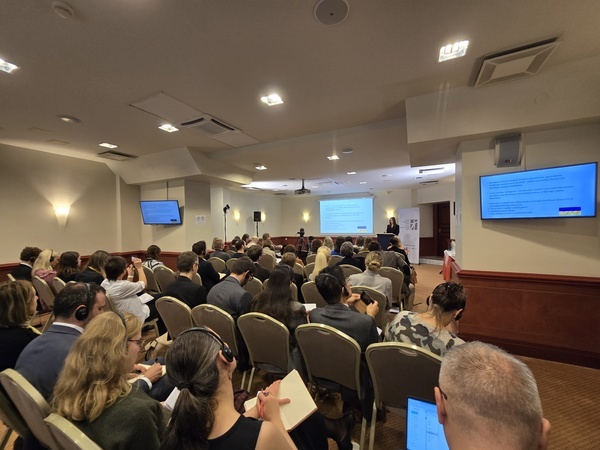
The conference was attended by 56 participants representing non-governmental organisations, state and municipal authorities, the Ombudsperson’s Office, human rights activists, foreign embassies, international organisations and foundations. The event was also livestreamed. A recording of the conference is available in the archive of the Latvian Centre for Human Rights’ YouTube channel: Latvian Centre for Human Rights YouTube archive
The conference was held as part of the project “Strengthening Human Rights Culture in Latvia”. The project is financially supported by the Society Integration Foundation using funds from the Latvian state budget.
Attachments
- CONFERENCE PROGRAM: "Current Human Rights Issues in Latvia: An NGO Perspective"
- 1_LV_Latvian Centre for Human Rights: Anhelita Kamenska, Liliana Sauša
- 2_ENG_Eesti Inimõiguste Keskus: Uljana Ponomarjova
- 3_ENG_Helsińska Fundacja Praw Człowieka: Marcin Wolny
- 4_LV_Latvian Centre for Human Rights: Alise Hirša-Zandberga, Anhelita Kamenska
- 5_ENG_Žmogaus teisių stebėjimo institutas: Deimantė Juščiūtė
- 6_ENG_Pravobraniteljica za ravnopravnost spolova Republike Hrvatske: Kristijan Kevešević
Oпубликованный: 2026-10-25